Wednesday, March 4, 2026
Home Blog Page 80

Amazon Prime Day Sale 2022 India Dates Announced as July 23-24: 48-Hour Event to Bring Over 30,000 New Products

0
Amazon Prime Day Sale 2022 India Dates Announced as July 23-24: 48-Hour Event to Bring Over 30,000 New Products

[ad_1]

Amazon Prime Day sale 2022 will take place in India between July 23–24, the e-commerce giant announced on Wednesday. The Prime Day sale in the country will notably take place just days after the annual sale going live in the US, UK, and other major markets on July 12. As its name suggests, Prime Day is specifically meant for Amazon Prime customers. It takes place every year, with deals, discounts, and offers on a large number of products.

Deals, discounts, and offers during the Prime Day sale 2022 in India will kick off at 12am on July 23 and will run through July 24. Amazon said that the 48-hour sale event would bring over 30,000 new product launches from over 400 Indian and global brands including Samsung, Xiaomi, and Intel.

There will also be 2,000 new product launches from over 120 small and medium businesses (SMBs) such as XECH, Cos-IQ, Himalayan Origins, SpaceinCart, Mirakii, Karagiri, Nirvi Handicrafts across categories including electronics, fashion & grooming, jewellery, handmade products, the company said.

Customers using ICICI Bank and SBI cards and EMI transactions will get 10 percent discounts on various products during the sale.

Amazon will bring up to 55 percent discount on its Echo, Fire TV, and Kindle devices under the Prime Day sale in the country. There will also be deals across smartphones, consumer electronics, appliances, TVs, kitchen, daily essentials, and toys, among others. Further, the online marketplace is touted to bring deals on Amazon Basics Fire TV Edition TVs during the sale.

The Prime Day sale will also bring deals on Alexa inbuilt smartphones, smartwatches, speakers, TVs. The Amazon shopping app on Android as well as Alexa on Echo devices will be able to provide details about the two-day event by saying, “Alexa, what is Prime Day?”

In addition to the deals and discounts on various items, the Prime Day sale will bring rewards of up to Rs. 2,500 to customers paying for their bills and recharges and sending money using Amazon Pay. These rewards will be available until the beginning of the sale event.

Amazon Prime members will also get unlimited five percent cashback on Prime Day purchases using the Amazon Pay ICICI Bank credit card. Signing up for the credit card is also claimed to bring Rs. 2,200 in rewards.

The Prime Day event will additionally bring the release of two Indian Amazon Original series, namely Modern Love Hyderabad in Telugu on July 7 and Comicstaan Season 3 in Hindi on July 14. Prime members are also teased to get two additional “highly anticipated” titles that will be announced close to the Prime Day sale.

Amazon will also offer Prime members up to 50 percent discount on purchasing most add-on subscriptions among the 12 video streaming services that are bundled under Prime Video Channels.

Similarly, Amazon Music users in India will get two playlists: Desi Vibes in Hindi and Fully Tolly in Telugu. Indic language playlist will also feature star artists including AR Rahman, Jubin Nautiyal, Ritviz, and others headlining from Bollywood, Indian Pop and independent pop scene in Hindi music.

Prime Reading users will get 18 e-books to read for free across fiction, history, investing, philosophy and children’s books, including the bestseller One Indian Girl by Chetan Bhagat, Think Straight: Change your thoughts, change your life, Chanakya in the Classroom, Irrfan Khan: The Man, The Dreamer, The Star, among others.

Last month, Amazon announced that the Prime Day sale will be held between July 12–13 for Prime members in Austria, Australia, Belgium, Brazil, Canada, China, France, Germany, Italy, Japan, Luxembourg, Mexico, the Netherlands, Portugal, Singapore, Spain, the UK, and the US. The online sale will also go live for the first time in Poland and Sweden — alongside the other major countries.

Amazon at the time also announced that its Prime Day events will be held in India, Saudi Arabia, and the United Arab Emirates later this summer. The e-commerce giant is also hosting the loyalty sale in Egypt for the first time.

Last year, the Prime Day sale was conducted in India between July 26–27.


Affiliate links may be automatically generated – see our ethics statement for details.

[ad_2]

Source link

Xiaomi CyberDog, a Robotic Dog Powered by Nvidia’s AI Platform, Unveiled in India

0
Xiaomi CyberDog, a Robotic Dog Powered by Nvidia’s AI Platform, Unveiled in India

[ad_1]

Xiaomi showcased the quadrupedal robot named CyberDog in India on Monday. The robot, powered by Nvidia’s Jetson Xavier AI platform has 11 high-precision sensors including touch sensors cameras and GPS modules to sense and interact with its environment. The Xiaomi CyberDog comes with 128GB of SSD storage and it can respond to voice commands. It recognises wake-up commands and can be controlled using the bundled remote or a connected smartphone app. The CyberDog will be displayed in Mi Homes across Delhi, Mumbai, Bangalore, Chennai, Kolkata, and Ahmedabad. The CyberDog was unveiled initially at the Mobile World Congress (MWC) 2022 in February.

The Chinese smartphone brand, which is marking eight years of its foray into the Indian market, on Monday exhibited the four-legged robot CyberDog in select Indian cities. The robot is built on the Nvidia’s Jetson Xavier NX AI Supercomputer for Embedded Edge Systems, paired with 128GB of SSD storage. This AI supercomputer includes 384 Cuda cores, 48 Tensor cores, a 6 Carmel Arm CPU, and 2 deep learning acceleration engines. It also uses open-source algorithms.

Xiaomi says the CyberDog is agile and can adapt to complex terrain easily. It has 11 sensors, including cameras, GPS modules, and touch and an ultrasonic sensor to process data. Further, the CyberDog features an array of camera sensors including AI-based cameras, binocular ultra-wide-angle fisheye cameras, and an Intel RealSense D450 depth module for object tracking and creating a navigation map by eliminating obstacles. Powered by Xiaomi’s in-house servo motors that generate up to 32Nm of torque and 220 revolutions per minute rotations, the CyberDog is claimed to offer movements up to 3.2 metres per second and is said to perform actions such as backflips.

It has support for voice commands-based control and is claimed to recognise wake words and instructions. The robot can be also controlled via a remote or a smartphone app. For connectivity, the robot features three USB Type-C ports and an HDMI port and users can pair search light, panoramic camera, motion camera, and LiDAR with the CyberDog.

The CyberDog was initially unveiled at the Mobile World Congress (MWC) 2022 held in February in Barcelona. The company will display the robot at Mi Homes across Delhi, Mumbai, Bangalore, Chennai, Kolkata, and Ahmedabad in the coming days.


Affiliate links may be automatically generated – see our ethics statement for details.

For the latest tech news and reviews, follow Gadgets 360 on Twitter, Facebook, and Google News. For the latest videos on gadgets and tech, subscribe to our YouTube channel.


Nexo Seeks to Acquire Vauld, Amid Increasing Consolidation in Digital Currency Industry


[ad_2]

Source link

Best Smart Speakers You Can Buy in India

0
Best Smart Speakers You Can Buy in India

[ad_1]

A good smart speaker plays an important role in today’s connected homes, giving access to music and other audio content, information, tools and utilities that are useful around the home. You also gain the ability to voice-control any smart appliances and IoT products you may have, such as air purifiers, robot vacuum cleaners, and smart bulbs. Naturally, the more a smart speaker can do, the better it is. However, with audio content usually being the primary use case of a smart speaker, you also want to make sure you’ve got a device that sounds good.

The reliance on a good voice assistant system means that smart speakers are still largely limited to just a handful of brands. However, with Google and Amazon opening up access to their respective voice assistants to other brands, many more options are available today across price segments. Before we get to our recommendations, let’s first cover the basics of smart speakers, particular what it is that makes a speaker ‘smart’.

What is a smart speaker?

Defining a speaker isn’t really necessary, but it’s important to elaborate on what a ‘smart’ speaker is, and how it’s different from the typical wired or wireless speaker or speaker system. Apart from the ability to output audio loud enough to be heard in a small area such as a living room, a smart speaker is always connected to the Internet (usually through a Wi-Fi connection), and relies on this to access audio content, weather information, and more.

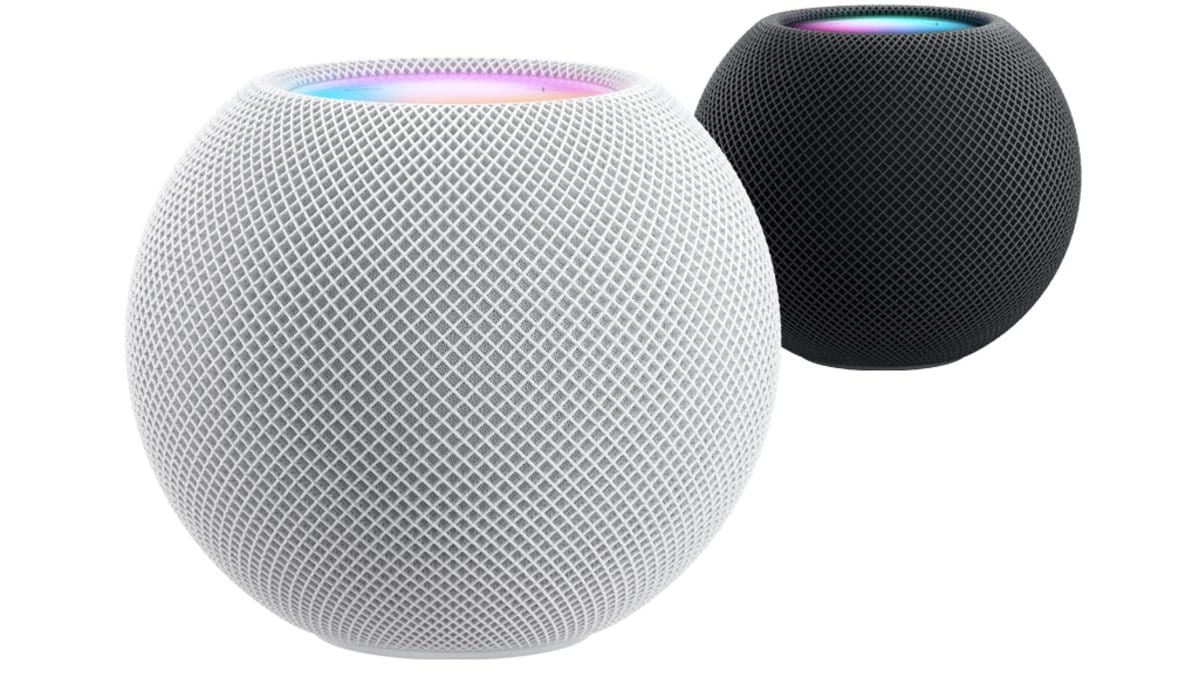
apple homepod mini image

It can also use this Internet access for a variety of other functions, including providing basic information, controlling smart appliances in the home such as light bulbs, air purifiers, and cleaning robots, to even household tools and utilities such as alarms, timers, and reminders. Many smart speakers also have Bluetooth connectivity, so they can be used as traditional Bluetooth speakers.

Most smart speakers need to be connected to a wall power socket to work, due to the lack of a built-in battery. There are some smart speakers that have a built-in battery and are able to work wirelessly, but this isn’t too common in the segment.

Should you buy a smart speaker?

A very important requirement for a smart speaker is reliable internet connectivity, since most smart speakers can’t do much without a good Wi-Fi connection. You’ll also need access to audio streaming services; while there are free options, the best results come when you use a premium streaming service such as Spotify or YouTube Music with a smart speaker. Of course, you also need the right accounts set up to use your smart speaker to the best possible extent. In the absence of these, you’re probably better off using a traditional Bluetooth speaker instead.

If you have smart appliances or other IoT devices in your home, a smart speaker will help you control these using just voice commands to the default voice assistant. Even being able to play particular music tracks, playlists or genres with only your voice is a very useful feature that will make your listening sessions a lot more seamless. Finally, streaming music and other audio content over Wi-Fi allows for higher bandwidth compared to Bluetooth, so you’ll get better sound quality while still enjoying the benefits of wireless streaming and connectivity.

google nest audio review main

The best smart speaker: Google Nest Audio

It’s not often that you come across a product with no significant drawbacks, and the Google Nest Audio is one such smart speaker. Although similar to the Google Home smart speaker range, the Rs. 7,999 Google Nest Audio is a huge step-up in terms of looks, sound quality, and the ability to pick up voice commands even from across a room. You simply won’t find a better smart speaker for under Rs. 10,000 today.

Available in two colours – Chalk (white) and Charcoal (black) – the Google Nest Audio stands upright on a tabletop, and looks great with its fabric-wrapped exterior. There’s just one physical switch at the back to mute the microphone, while the top of the speaker has a touch sensitive area to control playback, volume, and basic functions. All of this makes for an efficient design that encourages you to rely on your voice to control the speaker, and voice commands do work very well on the Google Nest Audio.

Apart from the fact that the microphones are able to pick up sounds from across a room, Google Assistant is also constantly improving and works very well on the Google Nest Audio. It’s easy to set up Google Assistant to control smart appliances, and basic commands and queries usually register perfectly with just one attempt. Apart from linking a streaming service and requesting audio tracks, playlists, artistes, and genres, there’s also Bluetooth connectivity and Chromecast Audio support, giving you plenty of options for how to stream music on the device.

Sound quality is a big factor that makes the Google Nest Audio one of our favourite picks among smart speakers. The sound is loud, detailed, and refined, matching the kind of sound quality you could expect from a wired speaker system around the same price. Of course, the sound quality is best when using Wi-Fi to stream, but it sounds decent enough over Bluetooth as well. All of this makes the Google Nest Audio our top pick among smart speakers.

Runner-up – for premium sound quality: Amazon Echo Studio

Although there are many devices in the Echo smart speaker range, none quite matches up to the Amazon Echo Studio. Priced at Rs. 22,999, The Amazon Echo Studio is among the best, biggest, and most expensive smart speakers you can buy in India right now.

With an impressive five-driver setup that includes three mid-range drivers, one tweeter, and one subwoofer, the Amazon Echo Studio offers loud, clean, and engaging sound, significantly better compared to everything else in the segment. Combine this with the benefits of Amazon’s Alexa voice assistant, and you have a smart speaker that does practically everything you want, and sounds great while doing it. You can even link the Amazon Echo Studio to a Fire TV device wirelessly, letting you use it as a sound system for your television, although we did face occasional lag in the sound with this setup.

Perhaps the only real drawback is the price; you can buy a pretty decent soundbar or speaker system for the same price, and despite all of its good qualities, the Echo Studio is just a single speaker after all. However, it’s the absolute loudest and best-sounding single-box smart solution you can buy right now, and deserves a place in our top picks for this reason.


Runner-up – for Apple fans: Apple HomePod mini

Apple isn’t as strong in the smart speaker segment as Google and Amazon, but the HomePod range did receive a big update recently. Priced at Rs. 9,900, the Apple HomePod mini is smaller and much more affordable than the HomePod, making it much more accessible and easy to use. It’s also ideal for users who are heavily invested in the Apple ecosystem, since you’ll need an iOS device and an Apple Music subscription to make the most of the smart speaker.

The smart speaker uses Apple’s Siri voice assistant, and just like other similar assistants , this can be invoked hands-free using the ‘Hey Siri’ command. To play specific tracks, you’ll need a paid subscription to Apple Music, since the smart speaker does not support any other streaming services such as Spotify or YouTube Music. Apple has notably stated that its Lossless Audio tier will be supported on the HomePod mini with a future firmware update.

You can also use two HomePod mini speakers as a stereo pair. We did face some issues with connectivity when using stereo pairing, and smart capabilities are basic at best because of the limited support for IoT appliances and devices. However, sound quality is excellent for the size and form factor, and the HomePod mini works very well within the Apple ecosystem, making this a good pick if you already have Apple devices at home.

The best completely wireless smart speaker – Sony SRS-XB402M

Most smart speakers don’t have batteries built-in, and need to be plugged into a wall socket to work. However, there are a few options that can be used as smart speakers with full functionality, completely off the wire. The best of these options, in our opinion, is the Sony SRS-XB402M, which is priced at Rs. 19,990.

This is an impressive smart speaker for a number of reasons, including access to Amazon’s Alexa voice assistant directly through Wi-Fi connectivity, the ability to use Spotify’s Connect feature to stream over Wi-Fi, IP67 dust and water resistance, and good sound quality. The built-in battery means that you don’t need to keep the Sony SRS-XB402M plugged in all the time, making this a good option for outdoor use.

sony xb402m review main

There is, of course, traditional Bluetooth connectivity apart from the Wi-Fi-based functions. However, the high price of the Sony SRS-XB402M, and the fact that Alexa’s communication features don’t work on non-Amazon devices do hold this completely wireless smart speaker back a bit.


The best affordable smart speaker – Mi Smart Speaker

Smart speakers come in all sizes and shapes, but most options priced at under Rs. 5,000 are small and only really capable enough for desktop or bedside use. The Mi Smart Speaker is an exception to that trend, offering loud, capable sound that rivals the Google Nest Audio, but is priced competitively at Rs. 3,999. It’s a full-fledged smart speaker with access to Google Assistant, and 12W of rated sound output.

While the sound occasionally lacked refinement and the design is a bit dull as compared to the better looking fabric-wrapped options from Google and Amazon, the Mi Smart Speaker is a value-for-money option with loud, enjoyable sound, and useful smart functionality. It’s the one to go for if your budget is tight.

Also consider

Amazon Echo Show 10 (3rd Gen): The Echo Show range is better classified as a smart screen, but naturally has a decent sound system built in for smart functionality using Alexa. It’s expensive, but is the most impressive smart device you can buy right now.

Amazon Fire TV Cube (2nd Gen): This isn’t exactly a smart speaker; it’s a streaming device with some smart speaker capabilities including hands-free access to Alexa. However, it serves the purpose quite well once connected to a TV or home entertainment setup, and does practically everything you want including TV controls for Rs. 12,999.

Google Nest Hub: The Rs. 6,999 Google Nest Hub is a smart display with Google Assistant capabilities. Although sound quality isn’t great, the visual cues for Google Assistant might make it worth considering.

Google Nest Mini: Among the smallest smart speakers you can buy right now, the Rs. 3,999 Google Nest Mini is the right size for desktop or bedside use. However, sound quality is quite ordinary, even for the price and form factor.

Apple HomePod: Apple’s larger smart speaker is bigger than the HomePod mini, and appropriately louder as well. However, at Rs. 19,900, the HomePod is expensive for a speaker that is inextricably tied to the Apple ecosystem. Keep in mind that it’s been officially discontinued, so finding one will be a bit difficult.


Is HomePod mini the best smart speaker under Rs. 10,000? We discussed this on Orbital, the Gadgets 360 podcast. Orbital is available on Apple Podcasts, Google Podcasts, Spotify, and wherever you get your podcasts.

Affiliate links may be automatically generated – see our ethics statement for details.

[ad_2]

Source link

Google Nest Cam (Battery) Along With Nest Aware Service Launched in India for Tata Play Subscribers

0
Google Nest Cam (Battery) Along With Nest Aware Service Launched in India for Tata Play Subscribers

[ad_1]

Google Nest Cam (battery) and Nest Aware have been launched in India in a collaboration between Google and Tata Play (formerly known as Tata Sky). The new Google Nest offerings are available under the Tata Play Secure+ package that is initially being rolled out in select cities. Google Nest Cam brings 1080p HD video streaming that users can view directly from the Google Home app. The Nest Aware service, on the other hand, comes with features including familiar face detection and up to 60-day event video history.

Google Nest Cam (battery), Nest Aware price in India

Google Nest Cam (battery) is available along with Nest Aware Basic in a Snow colour at Rs. 14,999. The security camera is separately priced at Rs. 11,999 that includes its installation charges, while the Nest Aware service is available at an additional annual charge of Rs. 3,000 for the basic tier. However, Tata Play is offering the camera along with the paid service as a package. Customers can, though, also pick the Premium plan of the Nest Aware service at Rs. 5,000 annually. Tata Play is additionally offering a Google Nest Mini (2nd Gen) worth Rs. 4,499 with the security camera for free under an introductory offer to customers ordering the Tata Play Secure+ package that includes the Google Nest Cam and Nest Aware Basic.

Alongside the Tata Play Secure+, Tata Play has brought its regular Tata Play Secure that brings a regular 1080p security camera and along with access to its live feed via a Tata Play Secure service. The Tata Play Secure camera is priced at Rs. 999, while the Tata Play Secure subscription is available at Rs. 99 a month.

Existing and new Tata Play subscribers in over 10 cities including Bengaluru, Chennai, Delhi and NCR, Hyderabad, Jaipur, Kolkata, Lucknow, Mumbai, and Navi Mumbai, Thane can now order the Tata Play Secure+ and Tata Play Secure by logging on to the Tata Play website.

Google Nest Cam (battery) specifications, features

The Google Nest Cam (battery) comes with a 2-megapixel camera sensor that brings a 130-degree diagonal field-of-view and supports up to 1080p video capture at 30fps frame rate. The camera also includes Night Vision with HDR support and is equipped with a motion sensor of 110-degree horizontal field-of-view to detect objects for surveillance.

Connectivity-wise, the Nest Cam (battery) has Wi-Fi 802.11a/b/g/n and Bluetooth Low Energy (BLE). It includes a 3.65V lithium-ion battery that helps record movement even in case of a power outage. The camera can record up to one hour of events on-device using its local storage. This helps keep a record of an incident even when Wi-Fi isn’t available.

The Nest Cam (battery) comes with a microphone and speaker to enable two-way communications. It works with Nest Aware to enable animal, vehicle, and personal alerts. The camera is also claimed to promise data on-device to help provide privacy to users while offering real-time surveillance.

Google has provided a wire-free design on the Nest Cam (battery) that makes it capable of being installed at any place in your home — be it on top of a door or on a wall. The camera can also stick magnetically to a metallic surface. Further, it has IP54-certified weather-resistant design.

The Nest Cam (battery) measures 83x83mm and weighs 398 grams.


Affiliate links may be automatically generated – see our ethics statement for details.

[ad_2]

Source link

Amazon Working to Enable Alexa to Mimic Any Voice, Confirms Senior Vice President

0
Amazon Working to Enable Alexa to Mimic Any Voice, Confirms Senior Vice President

[ad_1]

Amazon wants to give customers the chance to make Alexa, the company’s voice assistant, sound just like their grandmother — or anyone else.

The online retailer is developing a system to let Alexa mimic any voice after hearing less than a minute of audio, said Rohit Prasad, an Amazon Senior Vice President, at a conference the company held in Las Vegas on Wednesday. The goal is to “make the memories last” after “so many of us have lost someone we love” during the pandemic, Prasad said.

Amazon declined to share when it would roll out such a feature.

The work wades into an area of technology that has garnered close scrutiny for potential benefits and abuses. For instance, Microsoft recently restricted which businesses could use its software to parrot voices. The goal is to help people with speech impairments or other problems but some worry it could also be used to propagate political deepfakes.

Amazon hopes the project will help Alexa become ubiquitous in shoppers’ lives. But public attention has already shifted elsewhere. At Alphabet‘s Google, an engineer made the highly contested claim that a company chat bot had advanced to sentience. Another Amazon executive said on Tuesday that Alexa had 100 million customers globally, in line with figures the company has provided for device sales since January 2019.

Prasad said Amazon’s aim for Alexa is “generalisable intelligence,” or the ability to adapt to user environments and learn new concepts with little external input. He said that goal is “not to be confused with the all-knowing, all-capable, uber artificial general intelligence,” or AGI, which Alphabet’s DeepMind unit and Elon Musk-co-founded OpenAI are seeking.

Amazon shared its vision for companionship with Alexa at the conference. In a video segment, it portrayed a child who asked, “Alexa, can grandma finish reading me the Wizard of Oz?”

A moment later, Alexa affirmed the command and changed her voice. She spoke soothingly, less robotically, ostensibly sounding like the individual’s grandmother in real life.

© Thomson Reuters 2022


Affiliate links may be automatically generated – see our ethics statement for details.

[ad_2]

Source link

Apple Could Launch Second Generation AirTag Model Soon as Shipments Expected to Grow: Ming-Chi Kuo

0
Apple Could Launch Second Generation AirTag Model Soon as Shipments Expected to Grow: Ming-Chi Kuo

[ad_1]

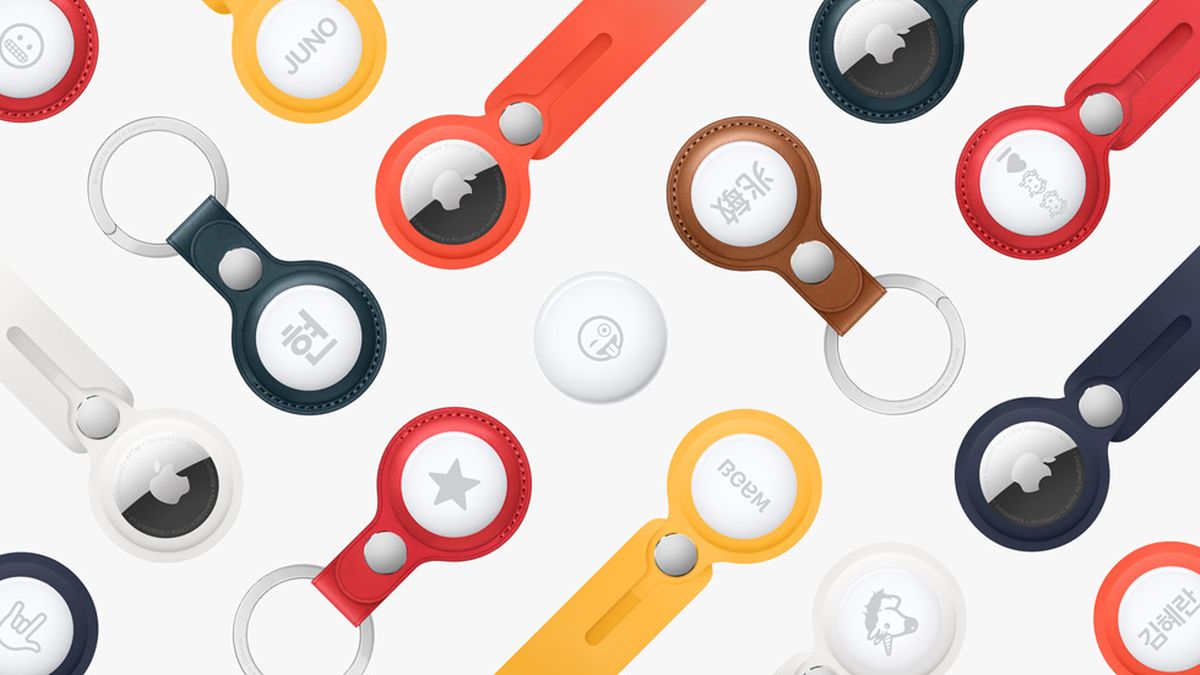
Apple has shown a significant improvement in its AirTag shipments, which is estimated to have reached about 20 million units in 2021, followed by 35 million units 2022, as revealed by analyst Ming-Chi Kuo. The analyst has also predicted that the recent trend may push Apple to launch a second generation AirTag soon.

Apple had introduced AirTags as a way to keep track of items, but latest reports have suggested that the company has progressively expanded shipments of the AirTag since its debut, according to a tweet by the TFI International Securities analyst.

Gadgets like AirTags use a wireless connection to notify users when they leave their current location. The devices can be put wherever because of the size of a huge coin. In April 2021, Apple launched AirTag, a gadget that allows users to track lost personal items using their iPhone.

According to Kuo, Apple AirTag has now received significant attention in the past. However, the new growth can possibly encourage the tech giant to launch another generation of the device.

While it’s difficult to see how the original AirTag might be improved upon, Apple releases updates to all of its other hardware products regularly, so it’d be unusual if the AirTag were to be left out. Apple wasn’t the first business to release a small monitoring device, but, as with other hardware categories, it improved on what was already available.

The AirTag is appealing in terms of both aesthetics and ease of use. Apple’s gear is designed to operate together flawlessly, and the AirTag is no exception. It’s all really easy and clear, from connecting it to one’s phone in the first place to locating it, if it goes misplaced.

But Apple might not be happy to hear that AirTags are being used to spy against the people’s will. The company quickly developed anti-stalking features to make this type of abuse more difficult.

Kuo said that AirTag sales haven’t surged yet, but they’re starting to gain momentum as iPhone buyers find AirTags useful and easy to set up and use.


Affiliate links may be automatically generated – see our ethics statement for details.


[ad_2]

Source link

LG Electronics to Enter Next-Gen Logistics Market, Set to Sign MoU Agreement With CJ Logistics

0
LG Electronics to Enter Next-Gen Logistics Market, Set to Sign MoU Agreement With CJ Logistics

[ad_1]

LG Electronics and CJ Logistics will enter the next-generation logistics robot market.

LG Electronics said it will sign an MOU agreement with CJ Logistics to jointly develop logistics robots at CJ’s TES Innovation Center in Dongtan, Gyeonggi-do on the 15th with Kim Kyung-hoon, head of TES Logistics Technology Institute, and Jang Ik-hwan, head of LG Electronics’ BS division, attending.

Under the agreement, the two companies will set optimised robot operation processes for each logistics hub, jointly develop order picking systems based on self-driving robots to find and classify products, and apply robot solutions to CJ Logistics warehouses.

Next month, LG Electronics will supply logistics robot solutions such as LG CLOi CarryBot, warehouse facility control solutions, and multiple robot control systems to CJ’s largest logistics centre Megahub Gonjiam.

It plans to expand the application in CJ’s other logistics centres.

The CLOi CarryBot is a logistics robot to loads a large number of products and transports them to their destination. It is a robot that evolved from an automated guided vehicle (AGV) to an autonomous mobile robot (AMR).

LG Electronics completed the verification of the CLOi CarryBot last month and conducted a test operation for proof of concept (POC) at the large logistics hub.

The global logistics and delivery robot market is currently growing fast. Japan’s Fuji Research Institute predicted that the related market size will reach KRW 11.5 trillion (roughly Rs. 693 crore) by 2025.

In addition to supplying logistics robots, LG Electronics will also focus on establishing logistics solutions for all logistics processes from order to last-mile delivery.


Affiliate links may be automatically generated – see our ethics statement for details.

[ad_2]

Source link

iRobot Roomba j7+ Robot Vacuum Cleaner Review: Picks Up After Itself

0
iRobot Roomba j7+ Robot Vacuum Cleaner Review: Picks Up After Itself

[ad_1]

Among the oldest names in the robot vacuum cleaner segment, iRobot’s Roomba lineup was synonymous with the product category as a whole for the longest time, and many referred to any robot cleaner as a ‘Roomba’. Things have changed now, particularly in India where more affordable, multi-functional options from brands such as Xiaomi and Milagrow have gotten a bit more attention. However, iRobot is still around and its product range is available officially in India, including the newly launched Roomba j7+ robot vacuum cleaner.

Priced at Rs. 74,900, the iRobot Roomba j7+ is the most expensive and advanced product in the company’s Roomba range of robot vacuum cleaners. The j7+ sales package comes with the Clean Base automatic dirt disposal system, which empties the dustbin of the device after cleaning tasks. The Roomba j7+ boasts of improved navigation, object detection and avoidance, and more. Is this the best robot vacuum cleaner you can buy right now? Find out in this review.

irobot roomba j7 plus review camera iRobot

The iRobot Roomba j7+ has a forward-facing camera with a ‘headlight’ for navigation, giving it some effectiveness even in the dark


iRobot Roomba j7+ design

Unlike many brands that offer robot cleaners which combine vacuum cleaning and mopping in one device, iRobot splits the functions across different ranges. The Roomba range of products only focuses on the vacuum cleaning function, while the Braava range focuses on wet mopping.

The Roomba j7+ is therefore only a vacuum cleaning robot, and comes with the Clean Base docking station in the box. If you also have a Braava device, the two can work through the same app in a coordinated way so that both devices can efficiently vacuum and mop your home simultaneously and effectively.

The automatic dirt disposal system is similar to the iRobot Roomba i3+, but the Clean Base docking station that ships with the j7+ model is considerably smaller than that of the i3+ model. Despite the smaller size, it serves the same function and is similarly rated to be able to automatically dispose of dirt from the robot vacuum for up to 60 days before the disposable dirt bag needs to be replaced.

There is just one key difference between the Roomba j7+ model and the j7 model (not currently available in India) – the former comes with the Clean Base dock with automatic dirt disposal, while the latter has a standard charging dock. The robot vacuum itself is roughly the same size as most of its kind and has a disc shape, but appears just slightly taller than competing devices from brands such as Xiaomi, Milagrow, and 360.

On the top of the iRobot Roomba j7+ is a single button to control the device manually, although detailed and more convenient controls can be accessed through the iRobot Home app once connected to Wi-Fi and fully set up. Unlike some competing devices which have an openable top lid, the Roomba j7+ does not have this and instead, has a removable dust bin at the side. The front has a flexible bumper to absorb the occasional hits, and the primary camera and light which are used for the VSLAM (visual simultaneous localisation and mapping) navigation system.

The iRobot j7+ is available in a single black colour and has three wheels at the bottom to move around, two of which are motorised, and the third is a free stabiliser wheel at the front. On the underside of the vacuum is a single sweeper brush, and a double-roller brush mechanism for the suction area to help capture dirt and impurities. Included in the sales package are a replacement sweeper brush, replacement HEPA filter for the dust bin, and a cable to connect the dock station to a power outlet.

iRobot Roomba j7+ navigation and mapping

The iRobot Roomba j7+ uses a camera-based VSLAM navigation, with a forward-facing camera working as the ‘eye’ for the device. Interestingly, there is also a ‘headlight’ which turns on when the Roomba j7+ is working and illuminates the path of the robot vacuum cleaner. This made the device’s navigational accuracy decent even in the dark, which is where camera-based devices typically falter a bit.

With the front-facing camera, the iRobot Roomba j7+ seems to be much better with navigation than other camera-based devices I’ve reviewed, and indeed on par with Lidar-based navigation in terms of being able to detect obstacles and move through complicated furniture settings such as dining tables and chairs.

irobot roomba j7 plus review dirt disposal iRobot

The automatic dirt disposal system on the Roomba j7+ means that you don’t have to manually clean out the device’s dustbin as often


The greater resolution and visibility of the camera also allowed the device to better scan the environment and adapt its cleaning accordingly, which showed in its effectiveness in cleaning carpets and rugs, and being able to move efficiently within and between rooms. The iRobot Roomba j7+ took a couple of test runs to learn the layout of my home and create a map, which was fairly accurate. It even got the room divisions reasonably on point, and managed to correctly mark carpeted areas, which the device was able to move over effortlessly.

In general, the improved navigation of the iRobot Roomba j7+ helped to ensure a smoother and less clumsy navigational experience, as compared to earlier Roomba devices. Hard bumps against furniture, particularly chair and table legs were largely avoided, and the device moved slowly but calculatedly on the whole.

That said, there was one occasion where the Roomba j7+ fell off a single step dividing two rooms when the door was accidentally left open, but setting a narrow no-go zone here prevented this from happening again. On a couple of occasions, the device didn’t immediately go to the room it was instructed to, inexplicably taking a trip to a different room for a minute or so before fixing its path.

A key feature of the iRobot Roomba j7+ is its ability to avoid obstacles and pet waste on the floor, with the navigation system designed to steer clear of both of these. While I wasn’t able to test the device against the latter, the j7+ was able to properly avoid objects such as cables and towels or clothes placed on the floor.

On some occasions, these were photographed by the camera for review in the app, and I was able to instruct the device whether to permanently avoid the area (in the case of some immovable cables) or to clean over it if the obstruction had since been removed. The Roomba j7+ can generally tell the difference between a temporary obstacle and a permanent fixture, so this isn’t something you’ll find yourself having to do often.

iRobot Roomba j7+ app

The iRobot Home app is used to control all devices from the brand across the Roomba and Braava ranges, and also helps you manage multiple devices together in your home if that’s your use case. The app ties into the simplicity and ease of use of the Roomba j7+ itself, with visual representations of most parameters including mapping, cleaning, battery life, and more. Once set up and connected to your home Wi-Fi, you can control the Roomba j7+ from anywhere, provided both the smartphone and robot are connected to the Internet.

You can set ‘Favourite’ cleaning tasks (the whole house or specific rooms), empty the robot’s dust bin, modify the map to set room boundaries, no-go zones, and clean zones, create cleaning schedules, and control other basic settings of the Roomba j7+. Although there is no option to create a virtual wall, creating a narrow no-go zone across a room essentially served the same purpose for me, and helped to keep the device safe from accidental drops.

irobot roomba j7 plus review app iRobot

The iRobot Home app lets you control the Roomba j7+, and also provides mapping and cleaning details


Unfortunately, while the device is working, the map doesn’t show its location or cleaning status, and only updates to show areas cleaned after the task is completed, which is perhaps the only drawback of the app and device. What I did like is how the app calculated an estimated time a task would take to complete based on the rooms selected and cleaning history, which provided a map of the areas cleaned, time taken, and images of any obstacles encountered that needed review.

iRobot Roomba j7+ cleaning

While robot vacuum cleaners from other brands regularly specify the suction power of their devices and also let you modify the power level according to your cleaning needs, iRobot does quite the opposite. The Roomba j7+ instead automatically calculates and decides how much suction power is needed to clean a particular area, moving steadily and carefully to judge these parameters while it works.

On the user’s part, all that needs to be done is to instruct the iRobot Roomba j7+ which rooms (or the whole house) need to be cleaned, and the device takes over from there. While the Lidar-based 360 S7 took around 35-40 minutes to clean my whole home, the Roomba j7+ took around one hour. However, I found that this time difference was because the j7+ did a much more thorough and effective job of cleaning.

I usually found the device to be fairly quiet in operation as for the most part, the Roomba j7+ was dealing with regular, everyday dust particles on the floor of my home. I did notice brief increases in suction power at times when the j7+ was dealing with more stubborn messes, but the increase in noise was marginal and was only audible for short durations.

The device was also particularly effective with cleaning rugs and carpets, as well as moving rather effortlessly over them, which is something that most other robot vacuum cleaners that I’ve reviewed have had trouble with. The HEPA filter is said to be able to capture particles as small as 0.1 microns in size, thus offering some protection against allergy-causing dust mites.

irobot roomba j7 plus review underside iRobot

The iRobot Roomba j7+ is only a vacuum cleaner, and doesn’t have the ability to wet mop


Connectivity was stable on the device, and the Roomba j7+ was able to continue working effectively even in rooms that didn’t have a very strong Wi-Fi signal and would sometimes disconnect from the router. This naturally meant that I couldn’t use the app to give it any instructions when it was out of range, but it reliably returned to its dock station after cleaning every time during my review, and provided cleaning details on the map even for areas of my home that were out of Wi-Fi coverage.

The Clean Base automatic dirt disposal system that ships with the Roomba j7+ is a significant improvement over the one I tested with the iRobot Roomba i3+. Not only is it a smaller and nicer looking docking station, but also works better. I found it to work much more reliably on the j7+ than on the i3+, and save for a few large impurities such as small pieces of plastic which were too hard to lift, the dust bin in the robot was kept largely clean without any manual intervention.

The dirt disposal system itself uses vacuum suction to empty the robot’s dust bin and this gets quite loud for a few seconds after every cleaning task. However, it takes just a few seconds to complete, so it isn’t too disruptive or bothersome on the whole.

The dirt is accumulated in a disposable dirt bag in the Clean Base docking station, which according to iRobot, is good for 60 days worth of cleaning. Once the bag is full, the app will notify you, at which point you need to remove and dispose of the bag along with your regular garbage. One additional dirt bag is provided with the Roomba j7+, and more can be purchased from the company at a price of Rs. 1,660 for a pack of three. This makes it a bit expensive to operate in the long run.

iRobot Roomba j7+ charging and battery life

As per iRobot’s claims, the Roomba j7+ is capable of running for up to 75 minutes on a single charge, which could cover a 1,800 square-foot home once over. In practice, this would depend on the layout of the home and the order in which the rooms are accessed, given that it typically took around an hour to clean my 900 square-foot home.

irobot roomba j7 plus review clean base iRobot

The Clean Base docking station deposits dirt from the robot vacuum cleaner into a disposable bag after every cleaning task


I can safely estimate that the 75-minute figure sounds about right, but the area cleaned on a single charge is likely to be around 1,200 square feet, a fair bit lower than the company’s claims. On the whole I found the battery life to be quite ordinary considering the 2,210mAh battery capacity and the price of the Roomba j7+.

There is no way to know the exact battery level of the iRobot Roomba j7+ when in operation; the app displays a graphical estimate of the remaining battery, but this didn’t indicate much. That said, the Roomba j7+ was able to clean my home once over on a single charge with some battery to spare. In a larger space, the device will return to charge if needed, before resuming the cleaning from where it left off.

As with most devices of its kind, the Roomba j7+ can find its way back to the docking station on its own, and keep itself charged. Charging itself takes a while, but this is normal for robot vacuum cleaners; after a full cleaning of my home, it took a little over two hours to charge back to full.

Verdict

In a segment where many of the competing devices are capable of both mopping and vacuum cleaning simultaneously, the iRobot Roomba j7+ seems a bit expensive at its price of Rs. 74,900 given that it’s exclusively just a vacuum cleaner. You can, of course, also get a Braava Jet M6 for the mopping functionality, but you’re then looking at a combined price of around Rs. 1,25,000, not to mention the need to make space in your home for two devices.

The automatic dirt disposal system is an impressive feature that seems to make up for the premium price to some extent, and the effectiveness of the cleaning and ease of use of the Roomba j7+ makes the device worth considering. If you have the budget for it, it might be worth looking at, especially if you can also pick up the Braava Jet M6. If you’re looking at something more affordable, the Milagrow iMap 10.0 and 360 S7 are worthy alternatives.

Price: Rs. 74,990

Rating: 8/10

Pros:

  • Excellent for vacuum cleaning
  • Automatic dirt disposal system works well
  • Careful, precise navigation
  • Very easy to use

Cons:

  • Expensive to buy and operate
  • Mapping could be a bit better
  • Average battery life

Affiliate links may be automatically generated – see our ethics statement for details.

[ad_2]

Source link

Apple WWDC 2022 Keynote Highlights: iOS 16, New MacBook Models, watchOS 9, and More

0
Apple WWDC 2022 Keynote Highlights: iOS 16, New MacBook Models, watchOS 9, and More

[ad_1]

Apple Worldwide Developers Conference, or WWDC as it is also known, will kick off today in a keynote address at 10am PT (10:30pm IST). The developer-focussed keynote traditionally reveals upcoming software from the Cupertino-based electronics giant, and this year, we can expect the latest versions of its mobile, tablet, PC, smartwatch, and TV box operating systems, specifically, iOS 16, iPadOS 16, macOS 13, watchOS 9, and tvOS 16. Other reveals anticipated from the developer conference include new and improved native apps, while some rumours indicate Apple may unveil new Mac devices at the keynote, in the form of the new MacBook Air. Stay tuned for live updates from the keynote address, right here, and in the meanwhile, you can catch yourself up on the latest rumours about the upcoming announcements.

New software, hardware

As we mentioned, Apple traditionally uses WWDC as the stage to unveil the latest versions of its operating systems, and this year, we should get to see previews of iOS 16, iPadOS 16, macOS 13, watchOS 9, and tvOS 16 before their beta and general public releases later in 2022. 

iOS 16 is expected to bring improvements to such features and apps as notifications, lock screen, Camera, Messages, and Health apps, apart from a new audio experiences, redesigned app icons, interactive widgets, upgraded theme options, and a floating app window. iPadOS 16 on the other hand is anticipated to offer improved multitasking, almost on part with macOS.

As for the company’s operating system for desktop and laptop PCs, macOS 13 – rumoured to be codenamed Mammoth – is said to bring incremental changes including design overhauls for native apps. watchOS 9 is anticipated to bring updates to areas related to health tracking, an improved atrial fibrillation feature, other day-to-day activities, as well as navigation.

Finally, while not much has been rumoured about tvOS 16, it may be that Apple chooses to unveil homeOS as a dedicated smart home operating system at WWDC22. We also mentioned that there is a chance Apple unveils new Mac devices at the event, and the latest rumours indicate the company will launch the MacBook Air 2022 in a 14-inch display size, and less likely, it may also unveil the anticipated 13-inch MacBook Pro, both powered by Apple’s new M2 SoC.

[ad_2]

Source link

Dyson Building Robots That Are Capable of Household Chores

0
Dyson Building Robots That Are Capable of Household Chores

[ad_1]

Dyson, the company that gained popularity for “bagless” vacuum cleaners and “fanless-design” carrying air purifiers, has now shown off a range of prototype robots that it is developing to automate household chores and other tasks. The company said that it is recruiting 250 robotics engineers with expertise in computer vision, machine learning, sensors, and mechatronics and is projected to hire 700 more in the robotics field over the next five years. The plan is to start bringing robots to households by 2030.

At the International Conference on Robotics and Automation (ICRA) in Philadelphia on Wednesday, Dyson announced its plans to develop household robots. The company that moved its headquarters from the UK to Singapore in 2019 has released a video to give us a glimpse of its work.

The over three-minute video shows Jake Dyson, the company’s chief engineer and son of its founder James Dyson, detailing the plans to build robots.

“There’s a big future in robotics and saving people time performing chores for people and improving people’s daily lives,” he says.

The video features a robotic arm that is able to map a chair in three dimensions as well as a robot interpreting the environment using sensors, cameras, and thermal imaging.

Dyson is aiming to hire 700 people in the robotics field over the next five years to bolster its plans to develop household robots. Over the past six months, the company said that it had been “secretly refitting” one of the main aircraft hangars at Hullavington Airfield to make it available for 250 robotics engineers. It has also committed to invest GBP 2.75 billion (roughly Rs. 26,700 crore) to expand its work on robots and build new technologies, products, and facilities. Of the total planned investment, GBP 600 million (roughly Rs. 5,800 crore) is projected to be spent this year itself.

Research and development of robotics will take place at a dedicated lab in London as well as at the company’s headquarters in Singapore, the chief engineer says.

Dyson as a company has expressed its interest in developing newer technologies including robotics for some time. The company, in fact, introduced its first robotic floor vacuum cleaner back in 2014. However, this is the first time when Dyson is showing a clear interest in building robots — over household appliances including vacuum cleaners and air purifiers.

Although Dyson has been able to gain attention for its uniquely-designed products, the company faced hardships in the recent past.

In 2020, Dyson had laid off 900 people, including 600 in the UK alone, due to the coronavirus impact. In the same year, the company also cancelled plans to build an electric car that was in development at its design centre where it is now refitting the aircraft hangar for roboticists.


Affiliate links may be automatically generated – see our ethics statement for details.

[ad_2]

Source link